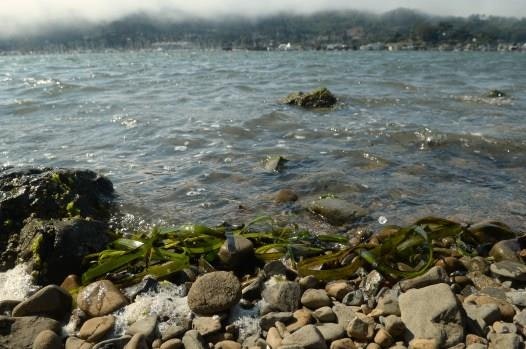
Eelgrass in Richardson Bay
Background
California has made restoring eelgrass meadows a priority as it confronts climate change, sea level rise, and the loss of vital ecosystems. The state’s Ocean Protection Council set targets to conserve 1,000 acres of eelgrass by 2025 and 10,000 acres by 2030, and few places have demonstrated restoration success as clearly as Richardson Bay.
Over the past decade, RBRA has reduced illegally anchored vessels in the Bay from more than 200 to fewer than one today, removed thousands of pounds of marine debris and dozens of abandoned vessels, and restored more than 15 acres of eelgrass in the Eelgrass Protection Zone. Backed by unique regulatory authority, RBRA is positioned to protect and scale this work.
RBRA is excited to announce new grants from the Marin Community Foundation (MCF), the San Francisco Bay Restoration Authority (SFBRA), and the U.S. Environmental Protection Agency (EPA). Over the next three years, this funding will allow us to introduce climate technology to scale eelgrass restoration and monitoring, continue traditional eelgrass restoration and marine debris removal, expand community engagement, and more.
Eelgrass (Zostera marina) is a type of marine, flowering seagrass that exists in temperate zones around the world. It thrives in soft seafloor environments, typically in shallow bays and estuaries. Eelgrass blades are thin and narrow, growing up from the sea floor toward the sun. Similar to kelp, it provides a habitat for many organisms that use it for food and shelter.
San Francisco Bay holds ⅓ of all California eelgrass and has experienced a major loss in the 20th century due to climate change, coastal development, sediment supply and anchor scours. Richardson Bay is the 2nd largest bed in the San Fransisco Bay area.
Unfortunately, most of us are unaware of the importance this plant plays in the marine environment. As a result, federal government designated eelgrass as Essential Fish Habitat (EFH) and a Habitat of Particular Concern under the Magnuson-Stevens Fishery Conservation and Management Act in 1996.
Why is eelgrass important?
- Basis of food our chain and ecosystems
- Habitat for - seals, porpoises, river otters, crabs, baby fish, migrating birds and even a spawning habitat for herring
- Food source – consumed directly by fish, shellfish, waterfowl and migratory birds
- Nursery for eggs & larvae and a refuge from predators
- Nutrient filter – removes nitrogen that can fuel algae growth
- Sediment trap – dense leaf growth and extensive rhizome and root mats remove particles from the water and stabilizes sediment
- Wave protection – helps reduce the effects of coastal erosion and stablizes shorelines
- Climate resiliency – is a carbon sink that makes up 10% of the ocean’s ability to store carbon
- Improves water quality and reduces ocean acidification

We are excited to announce that we have won new grants with the Marin Community Foundation (MCF), San Fransisco Bay Restoration Authority (SFBRA) and the Environmental Protection Agency (EPA). See below for each project progress.
EPA1 Eelgrass Grant
- Summer of 2026 marked the end of the marine debris removal and eelgrass restoration tasks. The project team has officially exceeded eelgrass restoration by planting 16.5 / 15 acres of eelgrass over 1 year ahead of schedule. This marks a significant achievement for RBRA and project teams.
- See the restoration planting plots from 2024 - 2026 provided by Merkel and Associate:

(New) EPA2 Marine Debris Removal Grant - This project will identify, prioritize, and remove submerged legacy marine debris (up to 700 tons) from Richardson Bay while supporting active eelgrass restoration, building on prior investments and advancing EPA San Francisco Bay Program priorities.
- Coastal Policy Solutions has been faciliating the grant onboarding process. Official project work will start within the next 1-2 months.
- Stay tuned for more project progress.
(New) MCF - This project pairs autonomous underwater vehicle (AUV) surveys to map existing eelgrass coverage across the EPZ, evaluate restoration outcomes from active and forthcoming restoration, and identify priority sites for future eelgrass expansion within Richardson Bay's 75 acres of identified restoration targets.
- This project kicked off in August. Ulysses and their AUV's have been mapping the EPZ in preparation for the monitoring phase of the project.
(New) SFBRA - This project will accelerate and expand the scale of eelgrass restoration in the San Francisco Bay Estuary through the implementation of eelgrass transplantation, seed-based restoration piloting, and robust community engagement.
- Official project work will start within the next 1-2 months. Stay tuned for more progress.
See our document page for updated reports.